BACK
BACK
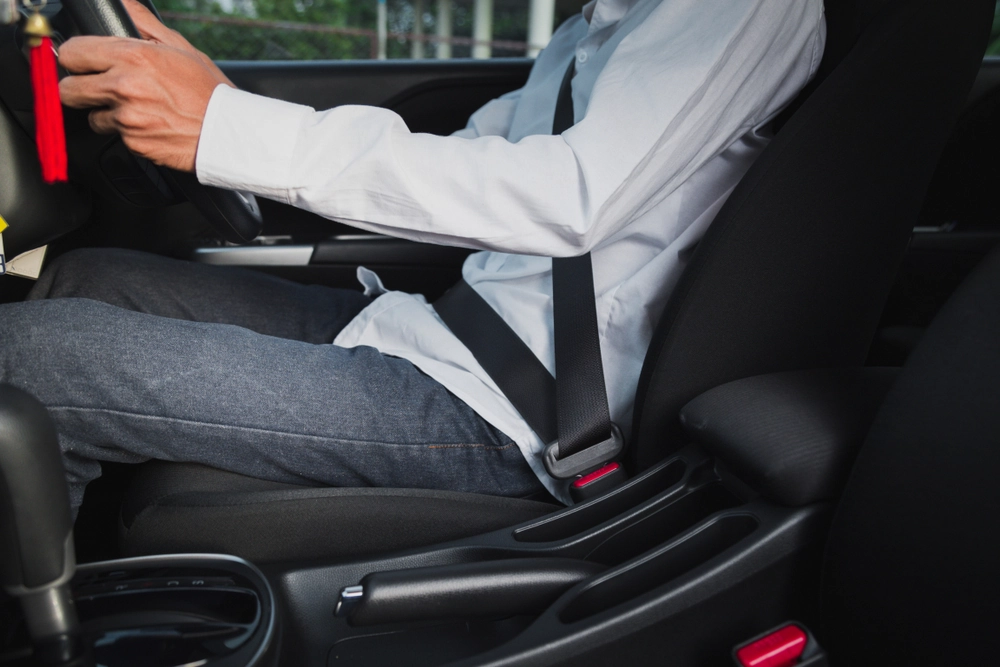
Not wearing a seat belt can affect a Louisiana injury claim. It does not automatically end the case, but the insurer may use it to argue that some injuries could have been avoided.
This was not always allowed. For many years, Louisiana law kept seat belt evidence out of civil injury cases. That changed on January 1, 2021, when the state repealed the rule that made nonuse inadmissible. A jury may now hear that you were not wearing a seat belt.
The risk became greater for crashes on or after January 1, 2026. Under Louisiana’s new comparative fault rule, a person found 51% or more at fault cannot recover damages. Someone below 51% may still recover, but the payment is reduced by that person’s share of fault.
What Changed in 2021
Louisiana Revised Statute 32:295.1 requires most drivers and passengers to wear seat belts while a vehicle is moving.
The law once said that failing to buckle up could not be used as proof of comparative fault or to reduce damages. That part of the law was repealed on January 1, 2021.
The defense may now tell the jury that you were unbelted. It may also argue that wearing a seat belt would have prevented or reduced certain injuries.
Still, an unfastened seat belt does not prove that every injury was avoidable. The defense must connect the lack of a seat belt to the harm caused in your crash.
The 51 Percent Rule Raises the Risk
Before 2026, Louisiana followed a pure comparative fault. A person could recover part of the damages even when that person carried most of the blame. For example, someone found 80% at fault could still receive 20% of the damages.
That changed for crashes occurring on or after January 1, 2026. A person who reaches 51% fault receives nothing. A person below that point may recover a reduced amount. The jury must also be told what happens when the injured person reaches the 51% limit.
This means seat belt evidence can have a much larger effect than it once did. It may reduce an award, and in a close case, it could help push the total fault above 50%.
Crashes before January 1, 2026, remain under the earlier rule. Our page on Louisiana comparative negligence explains how the crash date affects partial-fault claims.
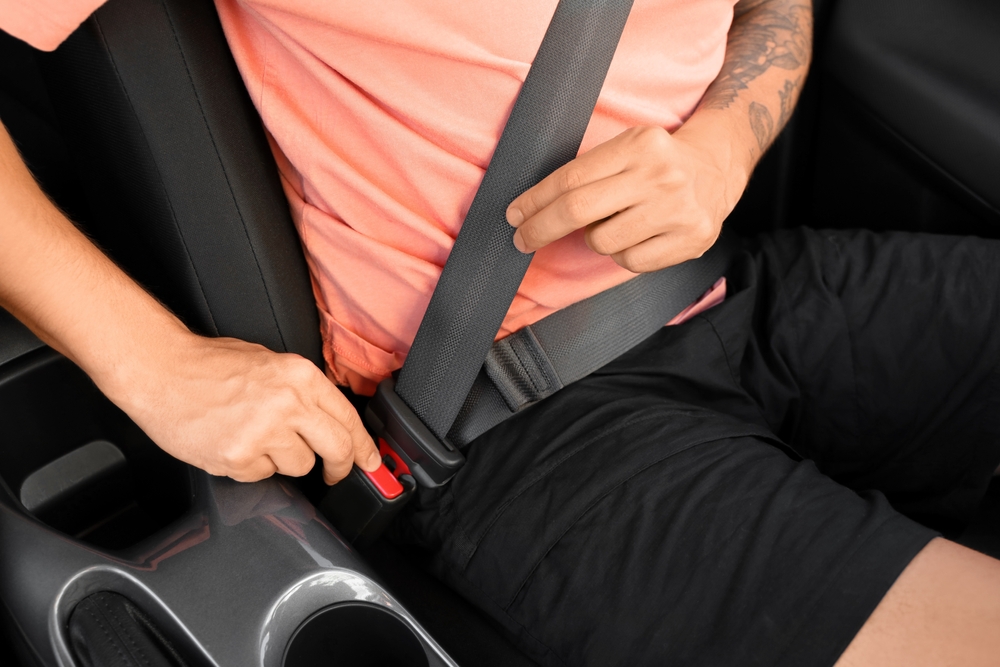
Being Unbelted Does Not Set a Fixed Percentage
There is no automatic amount of fault for failing to wear a seat belt. The defense must show how the lack of a seat belt affected your injuries. This often requires an expert who studies occupant movement and crash forces.
The type of collision matters. In a frontal crash, the defense may argue that a seat belt would have stopped the person from striking the steering wheel, dashboard, or windshield.
That argument may be weaker in a side-impact crash where the door or another vehicle struck the occupant’s body. A seat belt may not have prevented the same injuries.
NHTSA reports that lap and shoulder belts reduce the risk of fatal injury for front-seat car occupants by 45%. They reduce the risk of moderate to critical injury by 50%. Those figures show that seat belts work, but broad statistics do not prove what caused one person’s injuries.
What Can Strengthen or Weaken the Defense
| Factor | May strengthen the seat belt argument | May weaken the argument |
| Crash direction | Frontal or offset-frontal impact | Side, rear, or rollover crash |
| Injury pattern | Head, face, or chest struck the interior | Injuries that may occur while belted |
| Medical records | Notes describe the person as unrestrained | Records do not mention restraint use |
| Seat belt evidence | No loading marks on the belt | Belt shows signs of occupant loading |
| Vehicle data | Recorder shows the buckle was open | Data shows the buckle was fastened |
| Expert evidence | Expert links nonuse to specific injuries | No clear link between the belt and injuries |
No single item decides the issue. The vehicle data, medical records, crash direction, and expert findings must be considered together.
How the Numbers May Work
Suppose a driver is rear-ended on Elysian Fields Avenue and needs neck surgery. The total damages are valued at $400,000.
If a jury places 35% of the fault on the injured driver for not wearing a seat belt, the payment would fall to $260,000.
Now suppose the jury assigns 55%. For a crash on or after January 1, 2026, the driver would receive nothing.
The difference may depend on whether the defense can prove that the seat belt would have prevented the injury. A general claim that seat belts save lives is not enough by itself.
Preserve Evidence of Seat Belt Use
The vehicle may contain the clearest proof of whether the seat belt was fastened. The event data recorder may show the buckle status, while the belt itself may have stretching or marks from the impact.
This evidence can disappear if the vehicle is repaired, sold, dismantled, or crushed. A preservation notice can help keep the vehicle and its data available for inspection.
Medical records also matter. A note saying “unrestrained” may carry weight, but it is not always reliable when the responder did not see the crash.
Do not guess about seat belt use during a recorded statement. The vehicle data and physical evidence should be checked first.
Frequently Asked Questions
Can the insurer deny my claim because I was not wearing a seat belt?
Not automatically. The insurer must still review who caused the crash and whether the lack of a seat belt contributed to your injuries.
Does the rule apply to passengers?
Yes. A passenger may face a seat belt argument even when that person did nothing to cause the collision itself.
Does the 51% rule apply to a crash from 2024?
No. The new rule applies to incidents on or after January 1, 2026. Earlier crashes remain under the former comparative fault system.
Should I file a claim if I was not buckled?
You may still have a claim. Seat belt fault must be supported by evidence and is not simply assumed from the start.
An Unfastened Seat Belt Does Not Decide the Case
Louisiana juries may now hear evidence that an injured person was not wearing a seat belt. For crashes on or after January 1, 2026, the new 51% rule makes that evidence more important.
Even so, the defense must connect nonuse to the injuries caused in that particular crash. Vehicle data, belt hardware, medical records, and expert findings may all affect the result.
Allan Berger & Associates has represented injured people in New Orleans for nearly 50 years. The firm handles Louisiana car accident claims where fault and seat belt use are disputed. Free case reviews are available.