BACK
BACK
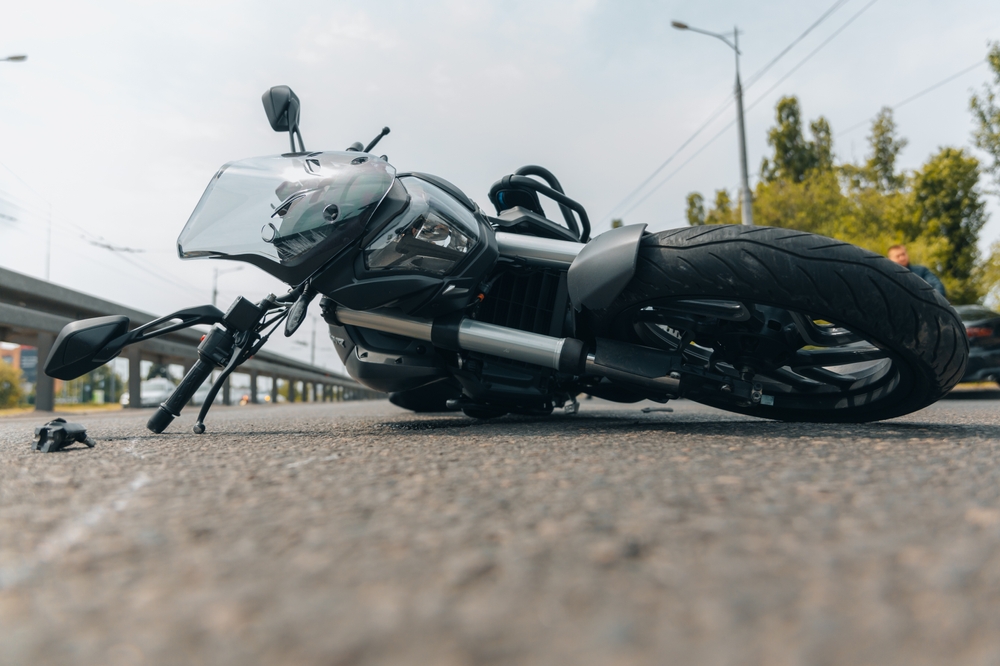
A bike may sit unused for months, a new purchase may not be covered right away, or coverage may lapse without the rider noticing. If a crash happens during that gap, Louisiana’s No Pay, No Play law can limit recovery even when the other driver caused the wreck.
Since August 1, 2025, the law blocks the first $100,000 in bodily injury damages and the first $100,000 in property damage for an uninsured owner or operator. Read on to see how the rule works, when exceptions may apply, and what it can mean for a motorcycle claim.
What The Statute Now Says
Under R.S. 32:866, there is no recovery for the first one hundred thousand dollars of bodily injury and no recovery for the first one hundred thousand dollars of property damage arising out of a motor vehicle accident, where the injury was occasioned by an owner or operator of a motor vehicle who fails to own or maintain compulsory motor vehicle liability security.
Act 16 of the 2025 Regular Session, originally House Bill 434, raised the layer from $15,000 and $25,000 to $100,000 each, effective August 1, 2025.
Motorcycles are motor vehicles for this purpose. Louisiana’s compulsory security requirement applies to them the same way it applies to cars, so a rider without coverage on the bike involved in the crash sits squarely inside the statute.
The old $15,000 layer was survivable. A rider with a broken wrist and $40,000 in damages still recovered $25,000. Under the current version, that same rider recovers nothing at all, because the entire claim now sits inside the barred layer.
The Court Costs Provision Most Riders Never See Coming
Subsection C can make a weak claim costly. If an uninsured owner files suit and the award does not exceed the statutory bodily injury threshold, that owner may be ordered to pay the court costs for every party in the case.
That means a rider could prove the other driver caused the crash, receive an award, and still leave with nothing after the No Pay, No Play limit applies. The rider may also face the defense’s court costs. This is why coverage should be checked before filing suit.
There is one important limit. Under subsection B, No Pay, No Play is an affirmative defense. The other side must raise it. If they do not, the restriction does not apply automatically.
Where The Rule Stops
The bar is narrower than it first appears, and several situations fall outside it.
- Damages above the layer. The statute removes the first $100,000, not the claim. A rider with $340,000 in proven damages can still pursue the remainder.
- Passengers. The bar reaches the uninsured owner or operator. A passenger on an uninsured bike is not the owner or operator of it.
- Riders who were insured. Coverage on the bike involved is what matters, so the analysis is about that vehicle and that policy period.
- Recognized exceptions. The statute is not applied where the at-fault driver was intoxicated, intentionally caused the crash, fled the scene, or was committing a felony.
- Property damage and bodily injury are measured separately. Each carries its own $100,000 layer.
| Rider’s situation | Damages proven | Practical outcome |
| Insured bike | $260,000 | Full claim, subject to fault reduction |
| Uninsured bike | $260,000 | First $100,000 barred; $160,000 remains in play |
| Uninsured bike | $85,000 | No recovery, plus exposure to all parties’ court costs |
| Uninsured bike, at-fault driver convicted of DWI | $85,000 | Exception applies; claim proceeds |
| Passenger on an uninsured bike | Any | Bar does not reach the passenger |

Fault and Filing Deadlines
For crashes on or after January 1, 2026, Acts 2025, No. 15 ends recovery at 51% fault. Below that, the award is reduced by the rider’s share. In motorcycle cases, insurers often argue over speed, visibility, lane position, or right of way.
Most claims arising on or after July 1, 2024, have a two-year deadline under Civil Code article 3493.1. Earlier crashes usually stay under the old one-year rule.
Frequently Asked Questions
Does No Pay, No Play Apply if My Car Was Insured, but My Bike Was Not?
Usually. The rule looks at the motorcycle involved in the crash. Insurance on another vehicle normally does not fix the gap, though the policy should still be reviewed.
What if My Policy Lapsed Just Before the Crash?
Coverage must be active on the date of the crash. Even a short lapse may bring No Pay, No Play into the case. The lapse and reinstatement dates will matter.
Does the Rule Affect Medical Bills?
Yes. Medical bills are part of bodily injury damages. Lost wages and pain and suffering fall into the same category, so the limit applies to the overall claim.
Can I still recover from my own uninsured motorist coverage?
A rider who carried no compulsory security on the bike generally has no UM coverage on it either. Where another household policy might respond, that policy language governs, and it is worth reviewing rather than assuming. Our page on partial fault in Louisiana claims covers the fault side of the analysis.
Conclusion
The 2025 change made No Pay, No Play much harsher for injured riders. The first $100,000 in injury damages may be blocked, which can wipe out many claims. Filing may also bring added court costs.
Still, the rule has exceptions. A rider may also recover damages above the $100,000 limit in a serious case. The defense must raise the issue and show that it applies.
If you were hurt while riding in the New Orleans area and your coverage is in question, Allan Berger & Associates can review the policy dates and possible exceptions. The firm has handled Louisiana motorcycle accident claims for decades. Consultations are free.
Sources
- Justia – La. R.S. 32:866, Compulsory motor vehicle liability security; limitation of damages
- Louisiana State Legislature – HB 434 (2025 Regular Session)
- Louisiana State Legislature – Acts 2025, No. 15 (HB 431), modified comparative fault
- Justia – Louisiana Civil Code art. 3493.1, Delictual actions; two-year prescription